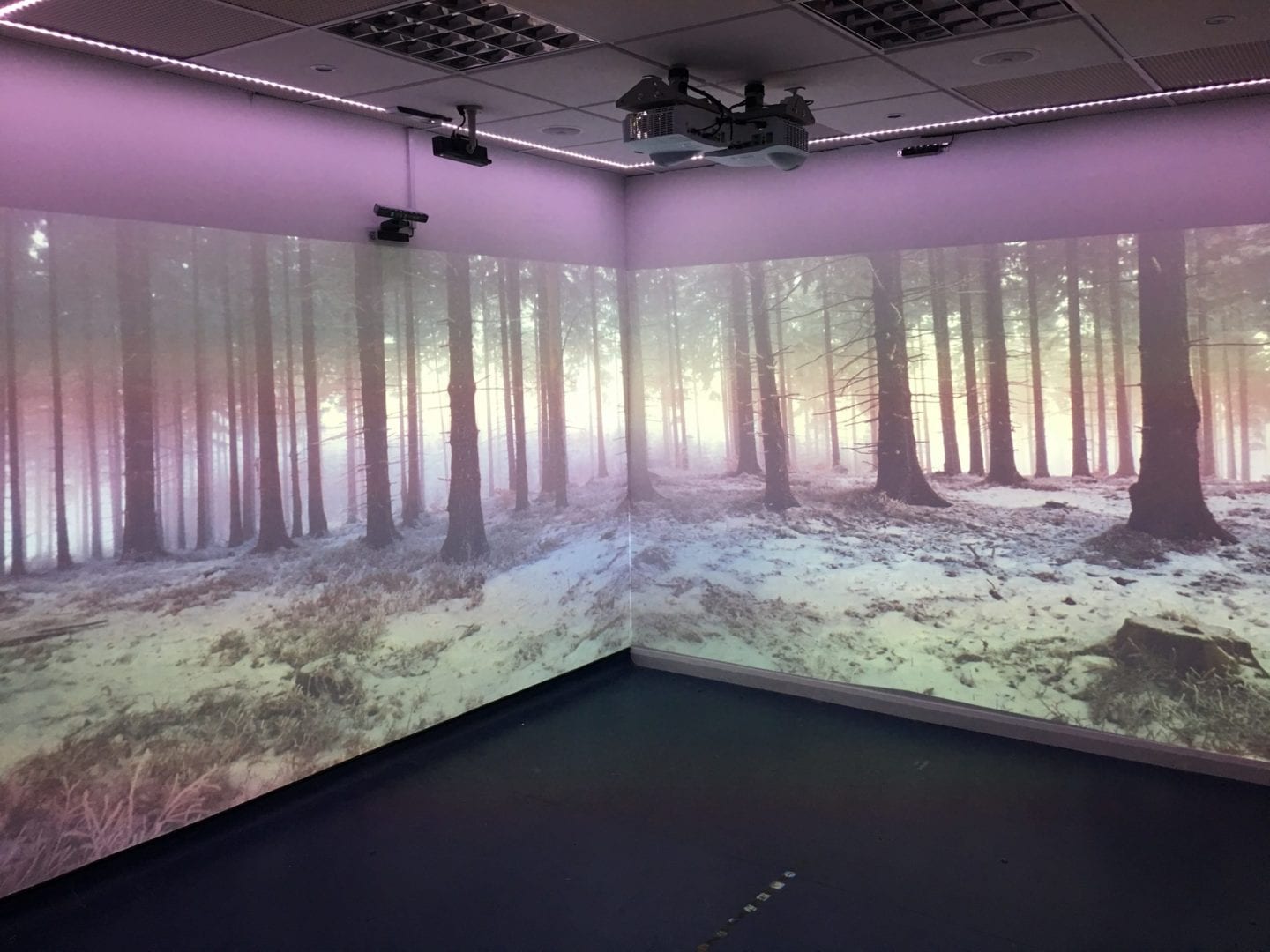
Sensory Room Design & Installation

Sense Sensory are specialists in Sensory Room Design & Installation. We can help you achieve your ideas, or help you visualise the room with our bespoke sensory room plans.

What to expect from our sensory room design:

  • Discuss our Sensory Equipment range and listen to your ideas
  • Measure up your room or area
  • Provide a free sensory room design and quotation
  • Provide a free sensory 3D drawing to give you an idea of what your finished sensory room would look like.
  • Complete any modifications or amendments to your quotation.
  • Should you wish to proceed, we can book in installation dates or if your having supply only, begin processing your order.
  • Provide you with a Sensory Room Servicing Quotation on completion of install, no obligation.

Get a quote for your sensory room design needs

Sensory Room Design FAQs

A sensory room should be designed to suit the needs of its users. Some common elements include:

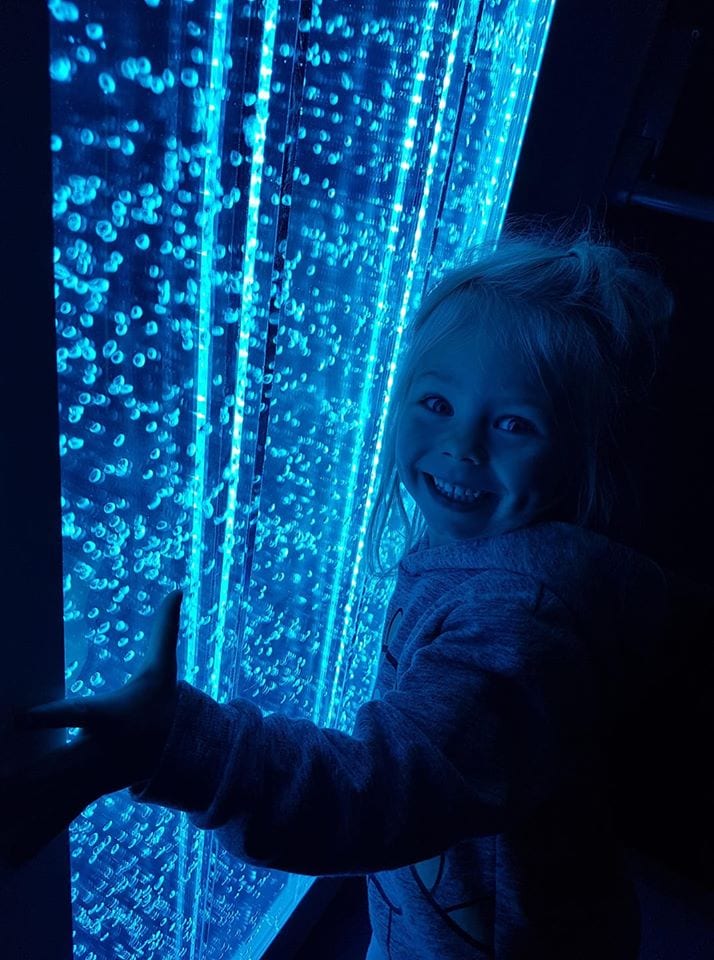
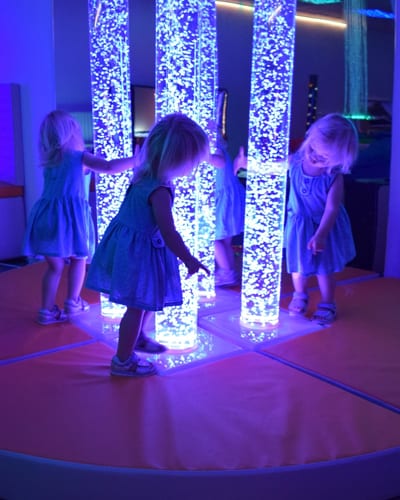
Lighting Effects – Bubble tubes, colour wash effects, fiber optics, LED projectors
Tactile Elements – Textured wall panels, liquid floor, Tactile wall panels
Auditory Features – Sound panels, sound pads, musical pads
Visual Stimulation – Infinity panels, ceiling effects, tubes and padded surrounds
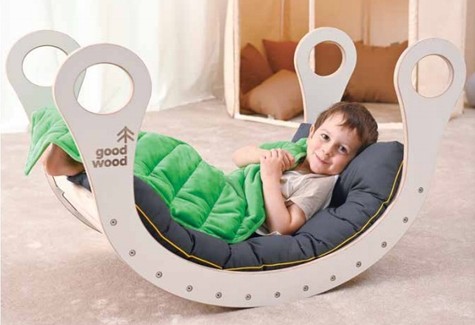
Soft Seating & Padding – Bean bags, padded plinths, padded walls
Interactive Equipment – Interactive floors, interactive screens, interactive wall panels

Each room is unique, so we can help tailor a design to suit your requirements, budget and space.

A calming room is designed to provide a relaxing and low-stimulation environment, using soft lighting, gentle sounds, and comfortable furnishings. These rooms are ideal for individuals who need a quiet space to de-stress and self-regulate.

An interactive room, on the other hand, is designed to be stimulating and engaging, incorporating light control , sound and interactive projections to encourage sensory exploration and development. These rooms are beneficial for individuals who need sensory input to focus or learn new skills.

The ideal size of a sensory room depends on its intended use and the number of users. Even a compact space of 2m x 2m can be effective, while larger rooms (such as 4m x 4m or more) provide opportunities for multiple zones and additional equipment. Regardless of size, any sensory space is beneficial, and there are numerous adaptable products available to enhance the experience.

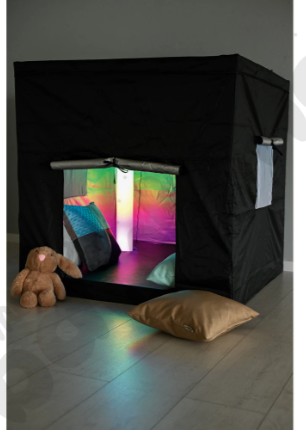
For smaller rooms, mirrors are an essential addition to create a sense of depth and openness. If ceilings are low, our bespoke ceiling tiles can help create the illusion of height. In larger rooms, incorporating a hideaway area is highly recommended for users who may feel overwhelmed. Pairing this with soft lighting can create a comforting retreat within the space, ensuring that all users feel supported.

The colour scheme depends on the room’s purpose:

Calming rooms – Soft, neutral tones (light blues, hues) to reduce sensory overload.
Interactive rooms – Darker or neutral backgrounds to enhance lighting effects.

A black or dark grey room with projected lights can create a deeply immersive and engaging sensory experience, while pastel or white tones are ideal for calming, relaxation-focused spaces. The choice of colours is highly personalised to each setting and may be influenced by branding or the Zones of Regulation framework.

If you’re unsure, we recommend a neutral base combined with dynamic lighting effects, such as our Colour Wash Kit with Cube Controller, to introduce adaptable and customisable colour options.

No, padding is not essential in a sensory room, but it depends on how the space will be used.

  • For relaxation and exploration – A standard sensory room with lighting, soft seating, tactile elements, and bubble tubes will be sufficient. Padded seating areas or wipe-clean piano wall pads can add extra comfort and durability.
  • For de-escalation and safety – A fully padded room is recommended to minimize injury risks. These rooms typically have high-level lighting features but limited sensory equipment to ensure safety.

The cost varies depending on the size, equipment, and level of customisation. On average:

  • Basic Sensory Corner/Area – Starts from £3,000 – £5,000
  • Mid-range Room – £8,000 – £15,000 with interactive equipment
  • Fully Custom Sensory Room including specialised Padding – Can range from £15,000 – £30,000+, depending on complexity

We provide tailored quotes to match your budget and needs.

It’s easy! Simply complete this online contact form, and our team will get back to you with a personalised estimate.

You may be interested in…

Sensory Room Gallery

Explore our Sensory Room Designs & Installations- from bubble tubes to projectors, calming sensory rooms, immersive sensory rooms and more. View our sensory room packages to begin exploring our multi-sensory world! Ask for a quote here.

Clients We’re Proud to Work With: